How to Choose the Best Garage Door Opener
The Short Answer
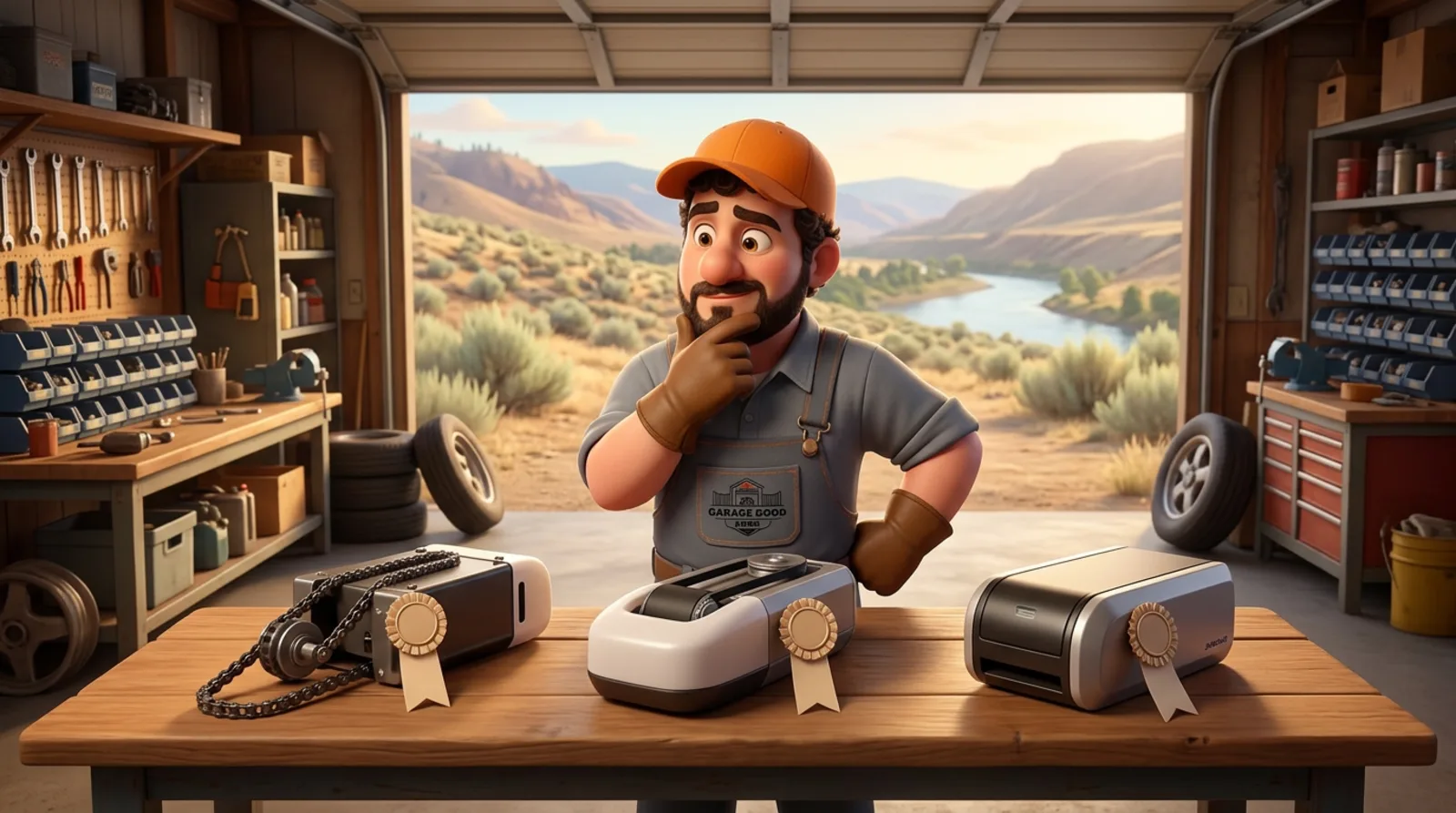
The best garage door opener is the one matched to your door and your garage, not the most expensive one. For most attached garages, that is a belt-drive opener with a DC motor, battery backup, and Wi-Fi. Choose a chain drive for a detached garage or shop where noise does not matter, and a wall-mount (jackshaft) opener for a high ceiling, high-lift door, or overhead storage. Then make sure the motor is sized for your door’s weight, the opener uses rolling-code security, and the door itself is balanced before the new opener goes in.
Step 1: Pick the drive type
| Drive type | Noise | Maintenance | Relative cost | Best for |
|---|---|---|---|---|
| Chain | Loud | Occasional lubrication and tension | Lowest | Detached garages, shops, heavy doors |
| Belt | Very quiet | Very low | Mid | Attached garages, rooms above |
| Screw | Moderate | Low | Mid | Simple, reliable lifting |
| Wall-mount (jackshaft) | Quietest | Low | Highest | High ceilings, high-lift doors, ceiling storage |
If you are not sure, the belt drive is the safe default for a home. Our opener installation cost guide shows how the drive types compare on price.
Step 2: Size the motor for your door
An opener that is too small strains every cycle and fails early, especially in the cold. As a rough guide:
- Standard single or double steel door: 1/2 HP or equivalent is usually enough.
- Heavy insulated, wood, or oversized door: 3/4 HP or larger.
- Very tall or heavy shop doors: heavy-duty or commercial-rated openers.
Many newer openers use DC motors rated in newtons or “HPS” rather than horsepower. Check the opener’s maximum door size and weight against yours.
Step 3: Choose the features that matter
- Battery backup. Keeps the door working through outages, which the Interior sees during winter storms and wildfire season. Highly recommended.
- DC motor with soft start and stop. Quieter, gentler on the door, and the motor type used for battery backup.
- Wi-Fi and app control. Check and close the door from your phone, get alerts, and let in family or deliveries.
- Rolling-code security. Standard on current openers; it changes the code every time you press the remote.
- Integrated LED lighting. Bright, long-lasting light for the garage.
- Automatic locking (wall-mount models). Many jackshaft openers include a deadbolt that locks the door when it closes.
- Extras. A wireless keypad for keyless entry, extra remotes, and a camera on some premium models.
Step 4: Check your garage
- Headroom. A ceiling-mount opener needs space above the door for its rail; low ceilings may point to a wall-mount unit.
- Spring type. Wall-mount openers need a torsion spring door.
- Power. An outlet near the opener location.
- Door balance. The single most important check. An opener is designed to guide a balanced door, not to lift a heavy one. A door with tired springs will wear out even the best new opener. Spring replacement typically runs $200 to $400.
Step 5: Brand comes last
LiftMaster, Chamberlain, and Genie all make good openers, and most of the differences come down to specific models and features. Our comparison of LiftMaster vs. Chamberlain vs. Genie covers how the brands differ. Pick the drive type, motor, and features first, then compare models within those choices.
Budget, mid-range, or premium?
- Budget: a basic chain drive with rolling-code security and standard remotes. Fine for a detached garage or a light, well-balanced door.
- Mid-range (the sweet spot for most homes): a belt drive with a DC motor, battery backup, Wi-Fi, and LED lighting. Quiet, outage-ready, and connected.
- Premium: a wall-mount jackshaft opener with automatic locking, or a belt drive with a built-in camera and extra features. Worth it for tall garages, high-lift doors, or homeowners who want every convenience.
Our opener installation cost guide gives typical installed ranges for each tier.
Common mistakes to avoid
- Buying on horsepower alone. A bigger motor does not fix a poorly balanced door; it just hides the problem until something breaks.
- Skipping battery backup. Outages are when you most need the door to work.
- Ignoring headroom and spring type. A wall-mount opener on an extension spring door, or a ceiling rail with no headroom, will not work.
- Reusing old sensors or wiring. New sensors are part of the opener system and are usually included; old wiring with staples through it causes faults.
- Forgetting the remotes. Make sure the number of remotes and any keypad you need are included.
- Choosing on price alone. The least expensive quote often skips the door balance check or uses a motor that is too small for a heavy insulated door, and both show up as an early failure, usually on the coldest morning of the year.
Choosing an opener for a Kamloops garage
Kamloops asks a lot of an opener. Summer heat in the high 30s runs electronics hot, winter cold stiffens lubricant and adds strain, and dust from the dry hills works into gears and sensors. Outages during storms and wildfire season make battery backup more than a nice-to-have. And many properties have detached shops or oversized doors that need a stronger motor than a typical suburban garage.
For most Kamloops homes, a belt-drive DC opener with battery backup and Wi-Fi covers it. For detached shops and heavy doors, a robust chain or heavy-duty opener makes sense, and for tall garages, a wall-mount unit. Book garage door opener service in Kamloops for an assessment, or in Logan Lake and the surrounding area. If your current opener is fairly new, our guide to adding Wi-Fi and heat alerts may save you a replacement.
Get a recommendation for your door
Not sure which opener fits? , call (778) 910-3106, or . A technician will check your door’s weight, balance, headroom, and spring type, and recommend the opener that fits, not the most expensive one.
Frequently Asked Questions
What is the best type of garage door opener?
For most attached garages, a belt-drive opener with a DC motor, battery backup, and Wi-Fi is the best all-round choice: quiet, reliable, and outage-ready. Chain drives suit detached garages and heavy doors on a budget, and wall-mount (jackshaft) openers suit high ceilings and high-lift doors.
What horsepower garage door opener do I need?
Most single and standard double residential doors work well with a 1/2 HP or equivalent opener. Heavier insulated, wood, or oversized doors benefit from a 3/4 HP or larger unit. Many newer openers use DC motors rated in newtons or 'HPS' rather than horsepower; match the opener's rating to your door's size and weight.
Is a DC motor better than an AC motor for a garage door opener?
For most homes, yes. DC motors are quieter, use soft start and stop to reduce wear, and are the type used with battery backup. AC motors are simple and durable but louder, and are more common on heavy-duty and commercial openers.
Do I need a smart garage door opener?
It is not essential, but Wi-Fi control is useful: you can check whether the door is closed, open it for a delivery or family member, and get alerts. If your current opener is less than about 10 years old, a smart module can often add Wi-Fi for $100 to $200 instead of replacing the opener.
How long should a garage door opener last?
Quality openers typically last 10 to 15 years with maintenance. A balanced door, regular lubrication, and an opener sized correctly for the door all extend its life, especially in climates with big temperature swings.
Which garage door opener brand is best?
LiftMaster, Chamberlain, and Genie are the most common brands in Canada, and all make good openers. The right model matters more than the brand: drive type, motor size, battery backup, and features should match your door and how you use the garage.